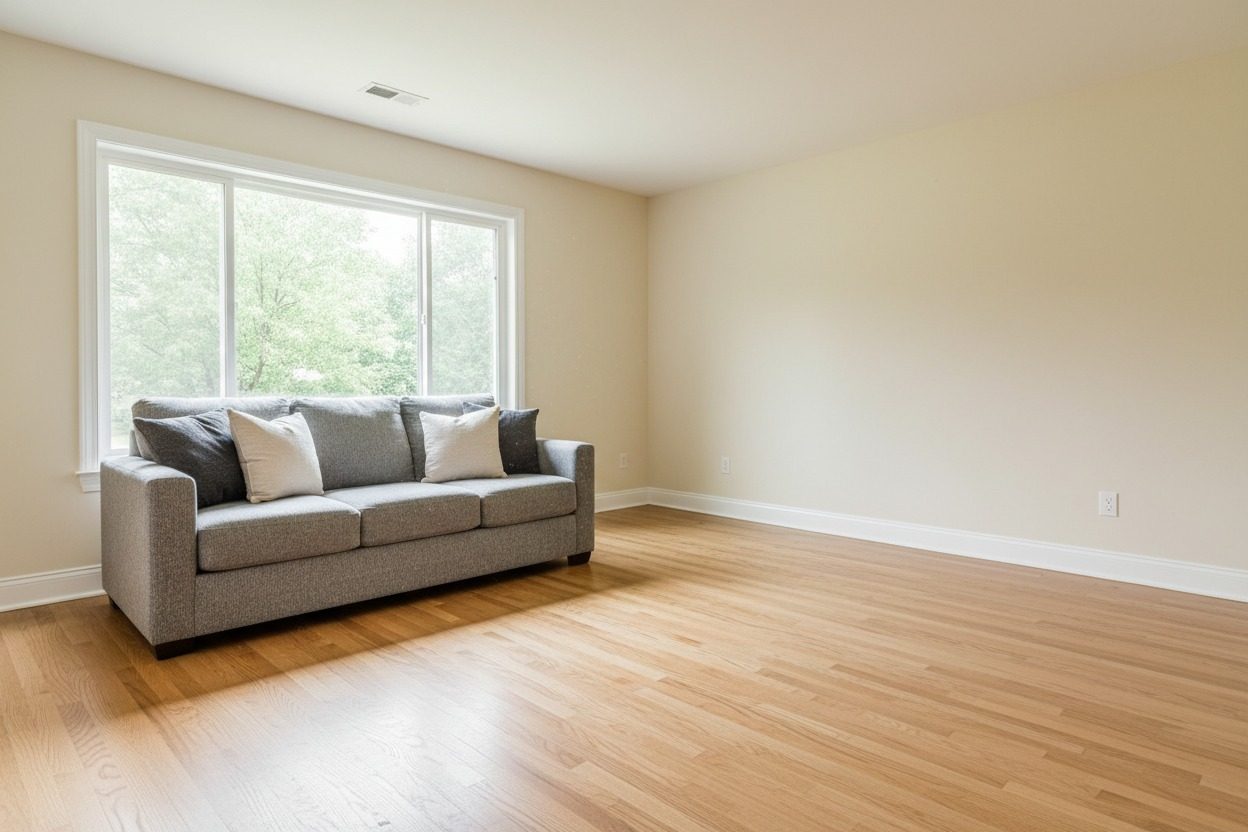
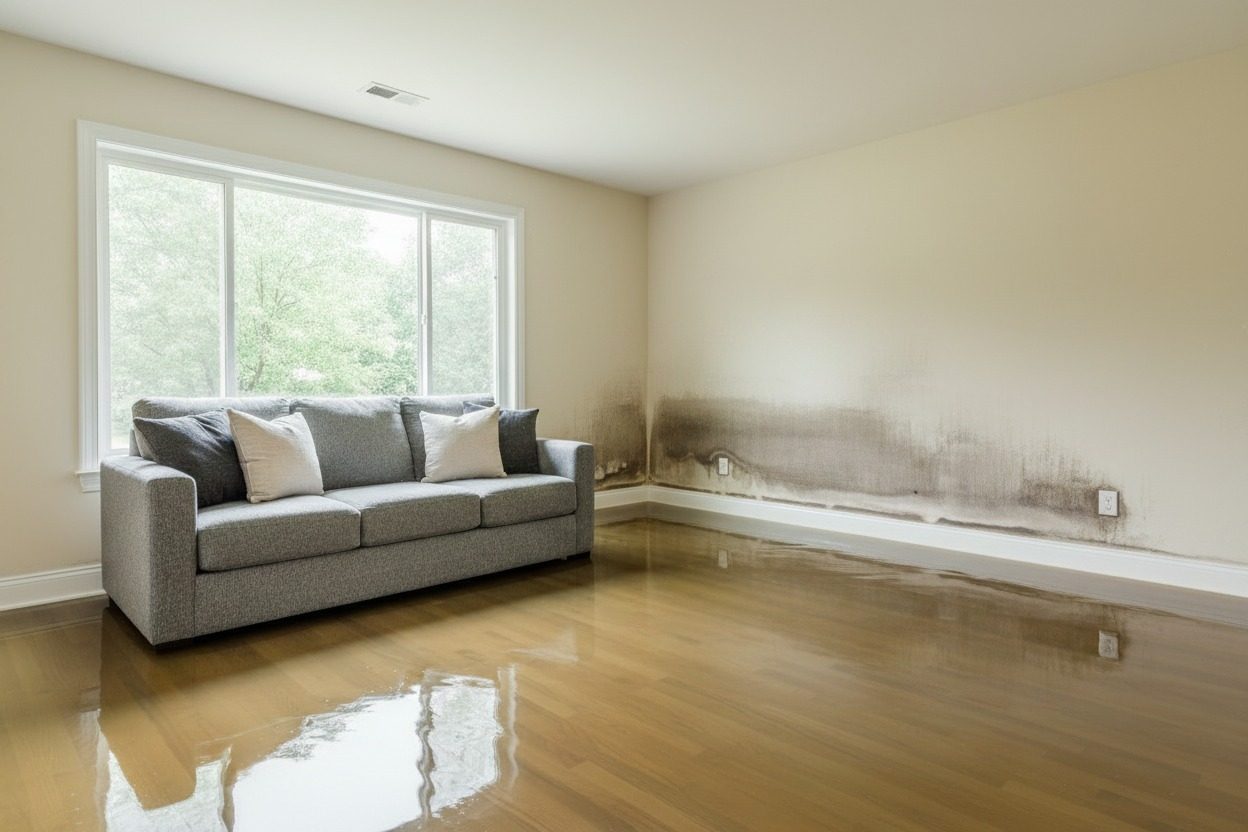
↔ Drag to compare · Illustrative example
Water Damage Restoration Tulsa:
Get the Water Out Before the Damage Sets In
Pipes burst at 2 a.m. in a February freeze, not at nine on a Tuesday. Call the 24/7 line and a local provider pulls the water out, dries the structure, and rebuilds what the water ruined.
No pressure, no obligation. Call and talk through the job.
Water damage gets worse by the hour. Help should not.
Water never stays where it started. A burst or leaking pipe, an overflowing tub, storm water, or a sewage backup soaks into subfloor and wicks up drywall within hours, and mold can begin forming in as little as 24 to 48 hours after water exposure. The first hours decide how big the job gets. Even when the surface looks dry, moisture keeps working behind the walls, under the flooring, and in the insulation.
Tulsa gets wet on a schedule. Spring storm season pushes water into crawl spaces and around slab edges, and the first February hard freeze finds every uninsulated pipe in an attic or exterior wall. The housing stock matters too: a post-war midtown bungalow on pier-and-beam hides water in different places than a newer Broken Arrow slab build. A moisture inspection starts with the places water travels first.
The emergency line answers 24/7. Call (918) 925-9347 and describe what happened. You get straight answers on what to do right now and a free estimate before any work starts. No obligation.
One call handles the water, the damage, and the rebuild.
Some companies only do dryouts. Here the extraction, the drying, the tear-out, and the reconstruction are handled by one provider. Homes, apartments, and commercial buildings.
Water Extraction & Structural Drying
Standing water comes out first, then drying equipment and moisture checks to confirm the structure is properly dried.
See extraction & drying →Sewage Backup Cleanup
Contaminated water handled safely: removal, disinfection, deodorizing, and restoration of the affected building materials.
See sewage cleanup →Mold Assessment & Removal
Strict protocols to remove mold safely and keep it from returning. Third-party air sampling verifies the work.
See mold removal →Storm Water Intrusion
Green Country squall lines can drop inches of rain in an hour. Storm water in the house, the crawl space, or the attic gets extracted, dried, and repaired.
How storm water gets dried out →Burst & Leaking Pipes
The classic February call: a frozen line lets go inside a wall. Burst or leaking pipes, overflowing sinks, toilets, or tubs, cleaned up before the damage spreads.
See burst-pipe cleanup →Repairs & Reconstruction
Dryout and rebuild handled by one provider: damaged materials removed, then full reconstruction returns the property to its original condition.
See dryout & rebuild →What will it cost? Get a quick range.
Pick what happened and size the wet area for a rough estimate range from national cost data. You will know exactly what to say when you call. Takes 30 seconds.
Ballpark only, built from published national market rates. Industry cost guides like Angi and HomeGuide put typical water damage restoration at roughly $3.75 to $7 per square foot depending on the water type, with most whole-home jobs landing around $1,300 to $5,600. It is not the provider's price: the real number firms up with a call and moisture readings. Free estimate, no obligation.
How does the job actually go?
When can you call?
The line answers 24/7. Describe what happened and where the water is. You get straight answers on what to do right now, and a free estimate.
What happens to the water?
Extraction pulls the standing water, then drying equipment works the floors and walls, with moisture checks to confirm proper drying, not a guess.
What about the rebuild?
Damaged materials come out, and repairs and reconstruction return the space to its original condition. Dryout and rebuild, handled by one provider.
Before any of that starts, most people want to know what they are actually looking at. If something smells wrong and you cannot find the source, start with the signs of hidden water damage. If it is a winter break, preventing frozen pipes in a Tulsa winter covers the shutoff and the thaw. If you are weighing whether to handle it yourself, DIY cleanup versus a pro is where the line really sits. And when it is time to file, the insurance claim checklist and water damage versus flood damage cover what to photograph and which policy pays.
Why call a local provider for this?
How Tulsa water damage plays out
Spring storm season, flash downpours, and the February freeze that finds the one pipe nobody insulated. Green Country homes get wet in patterns, and moisture mapping reads the damage quickly.
Your call gets answered
No 1-800 number, no out-of-state call center. Your call is answered here and passed to a local Tulsa provider.
One provider, start to finish
Some companies only do dryouts. Here the extraction, drying, tear-out, and rebuild are one provider and one plan. You never coordinate three contractors over one flood.
Honest about results
If wet carpet can be dried instead of replaced, you hear that. The plan comes from moisture readings and careful documentation, not a worst-case pitch.
Do you check the work before leaving?
Walk the finished job and flag anything that needs another look while the crew is still on site.
Service area
From post-war midtown bungalows with pier-and-beam crawl spaces out to newer slab builds in Broken Arrow, Bixby, Jenks, and Owasso. If you are in the Tulsa metro, you are in the service area. Water behaves differently in a 1940s crawl space than under new construction, and the drying plan accounts for it: basements, crawlspaces, and attics included.
What do Tulsa homeowners ask most?
Common questions from Tulsa homeowners and property managers.
What should I do first after water damage in my Tulsa home?
How much does water damage restoration cost in Tulsa?
How fast can mold start after water damage?
Do you work with my insurance company?
How long does water damage restoration take?
Is a sewage backup dangerous? Can I clean it myself?
Do you handle basements, crawl spaces, and attics?
Do you just dry things out, or do you rebuild too?
When can someone come out to look at the damage?
What does water extraction and structural drying involve?
Do you handle storm water that came in through the roof?
Can I stay in the house while it dries?
What happens to the carpet and drywall that got wet?
Do you take commercial buildings and apartments?
What proves the structure is really dry?
Is a mold inspection included when water sat for a while?
What should I do while I wait for the crew?
How much does mold removal add to the job?
Do you clean up after a fire as well as a flood?
Which Tulsa-area cities do you cover?
Tell us what needs drying out.
No obligation. Call and describe what happened.
Water spreads by the minute. Call.
The emergency line answers 24/7. Describe what happened and where the water is. You get straight answers and a free estimate. No obligation.
Water in the house right now? Make the call.
The line answers 24/7. One call, straight answers, no obligation.
(918) 925-9347